
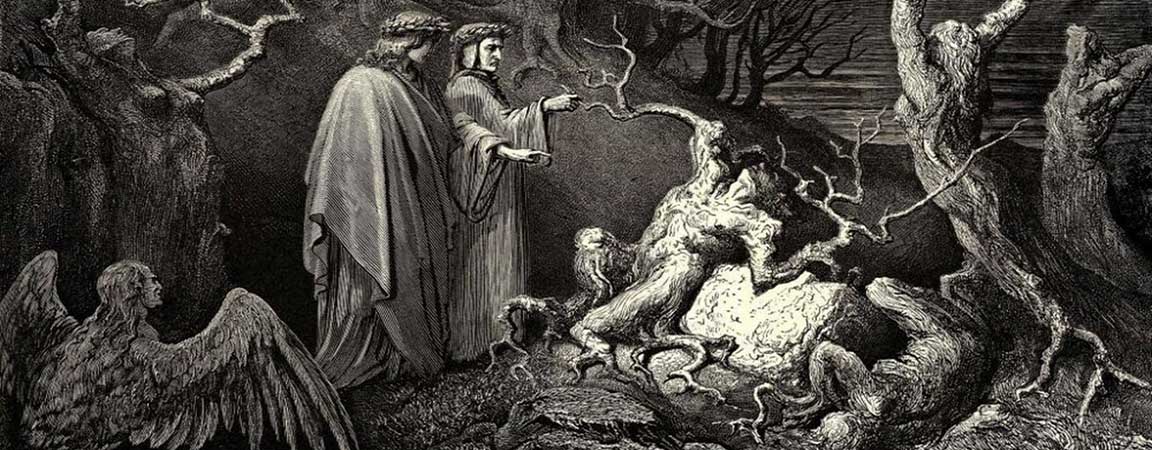
The Divine Comedy (1320)
A creation from the early 14th century, formally synthesizing medieval culture. A rather curious collection of philosophical, ethical, and religious views that prevailed at that time, written by Italian poet Dante Alighieri (1265 - 1321). The author details and illustrates the classic Catholic division into "paradise" and "hell." The book consists of three parts - a description of Hell, then Purgatory, then Paradise. The main character is sequentially transported from one realm of the afterlife to another, from one level to another, and along the way becomes acquainted with examples of mistakes and "wrong" lives in Purgatory, then with sinners and their punishments in Hell, and afterward - flies around the Paradise life. Accordingly, with each example, the author explains why what each sinner ended up there for is bad and deserves either gradual redemption of their sins (in Purgatory) or eternal torments on one of nine levels of Hell, each worse and more terrible than the previous one. Also, virtuous people in life end up in Paradise of a certain coolness (different levels of Heaven from 1 to 10), depending on the type of their virtue.
The book is written in the form of a comedy in the classical sense, that is, a poetic work with a dark beginning but a positive ending. It reads surprisingly easily and contains numerous examples of medieval (and preceding) culture: it abounds with religious elements and characters, myths both post-Christian and ancient, and mentions almost all important figures who lived before Dante. Quite curiously and masterfully, the author describes the geography and architecture of the afterlife: while reading, an effect of presence is created.