
Sigmund Freud (1856 - 1939, Austria)
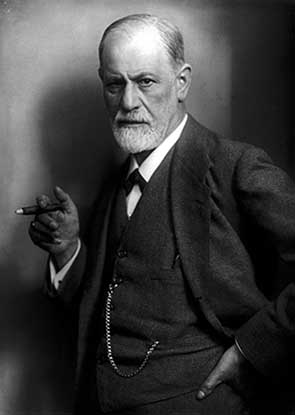 Sigmund Freud was the very pioneer and founder of a science, the need for which was dictated by the times themselves. The very fact that his life's work — the study of the psychic component of man — is evidence that in his time there arose a need for such work; a kind of symptom of a deep illness of Western society. This absurd construction, the ego, had grown so much in Europe by the end of the 19th century that it began to cause problems for many people: neuroses, hysterics, obsessive states, paranoia, and other phenomena for which there wasn't even a name. We owe Dr. Freud at least for laying the groundwork for the scientific classification of mental disorders. Freud introduced the concept of psychoanalysis — a method by which (analyzing dreams, and also resorting to first hypnosis, then the "free association method" — i.e., allowing patients to talk on any topic without concealment or control of thoughts) a doctor can diagnose a patient's condition. Freud sharply raised the questions of the difference between consciousness and subconsciousness, outlined paths and periods of the formation of human psyche, divided this psyche into three departments (the famous "Ego," "Id," and "Super-Ego"), and also showed the huge significance of the unconscious side of human essence. In his works, Freud examines such interesting manifestations of true subconscious desires as slips of the tongue (the famous phrase 'Freudian slip') and superstitions, building and proving theories on the experience of treating his own patients. I found it very curious while reading to draw parallels between my own suppressed desires and, for example, breaking a glass or making a slip of the tongue. Until you pay attention to such things, it seems they happen "by chance" :D
In essence, Sigmund stepped onto untouched ice: he gave impetus to a science whose main subject became man not in the biological, physiological, or historical sense, but in the sense of everything we represent: an incredible cocktail of emotions, thoughts, feelings, desires, fears, faith, superstition, as well as all that is dark and primordially animalistic that is also in us to an even greater extent, but which we rarely suspect.
His teaching about sexual energy (libido) as the driver of all our desires, and indeed of our entire lives, has been the subject of sharp criticism for more than a hundred years. Nevertheless, we live in a world densely populated with people, and we interact with them all our lives. Indeed, often people constitute our entire lives. Understanding them means understanding ourselves, and vice versa. It doesn't matter which end you start from — my advice will be the same: it's worth getting acquainted with Sigmund's ideas. I started with the book "Analysis of a Phobia in a Five-Year-Old Boy" (1909). You can continue with one of his key works: "The Interpretation of Dreams" (1900).
Carl Jung (1875 - 1961, Switzerland)
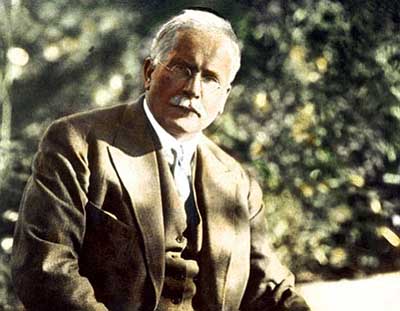 Freud's favorite student, follower, and then opponent, the Swiss Carl Gustav Jung, has crossed my path in the form of references, mentions, and recommendations several times over the past half year. Usually, this is a clear sign that it's time to start reading one author or another. So now, only a beginning has been made, but I already suspect the fruitfulness of this connection. As I understand more, I'll add material here. Currently reading "Psychology and Alchemy."