

Carlos Castaneda (1925 - 1998, Peru, USA)
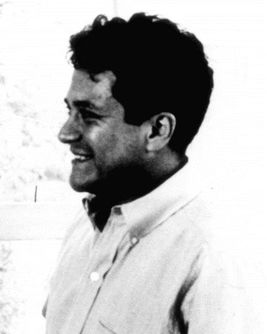 His works are a collection of personal diaries that he kept during his extended trip to Mexico while being a biology student at the University of California in the 1960s. The field trip led to Carlos meeting Don Juan, an Indian: a warrior and sorcerer, a carrier of an ancient shamanic tradition. Don Juan, under the guise of helping with the research, introduced Carlos to his philosophy, meanwhile feeding him solid portions of peyote cactus. Castaneda, overwhelmed by the pressure of the old Indian, mescaline, and Mexican heat, just kept writing everything down in his diaries, and then published them in a cycle of 11 books.
Sounds like drug addiction, esotericism, and mystification? Absolutely, that's what it is :) Despite this, the books of Carlos Castaneda had an enormous influence on me at the age of 19-20; they started my path of deeper self-knowledge 7 years ago. Why? Of course, one must make allowances for the impressionability of age and the fact that the reading coincided with a wonderful period of conscious freedom (first experience of being away from home and living in another country). But even taking this into account, Castaneda turned out to be my first serious guide into the world of consciousness and subconsciousness; he taught me that the world is perceived by us differently depending on the state of mind, and we're not talking about drug influence, but about conscious control of one's perception. So what does this mean?
An analogy can be drawn with a radio receiver: depending on the tuning, it receives waves of different lengths and frequencies. In the same way, we absorb the energy of the world through our receivers - consciousnesses - working as a kind of filter. Don Juan, as a spiritual leader and mentor of Carlos, teaches the shamanic way of controlling this very filter. As a bonus, his books ruthlessly dissect the feeling of self-importance, show the wretchedness of indulging one's weaknesses, and teach the stopping of internal dialogue. In general, one can say that "The Way of the Warrior" (as Don Juan's teaching is called) is, among other things, a complex of recommendations and methods for attaining inner freedom, personal development, and reaching higher levels of awareness of reality. Castaneda's books captivate with their frankness and power, while the amazing descriptions of the magic of ancient Indians and their spirits serve as a unique excursion into their culture and originality.
It's often recommended to start reading Carlos Castaneda with his third book, "Journey to Ixtlan"; the first two really do look too much like the jumbled diary of a student dazed by drugs :D However, I got pleasure and plenty of food for thought from them too.
The Teachings of Don Juan: A Yaqui Way of Knowledge (1968)
You must look at every path directly and without hesitation. All paths are the same: they lead nowhere. Is there a heart to this path? If there is, the path is good; if there isn't, it is of no use. One path makes travel joyful: as long as you follow it, you and it are one. Another path makes you curse your life. One path gives you strength, another destroys you.
The things people do cannot under any circumstances be more important than the world. And so, a warrior treats the world as an endless mystery, and what people do — as an endless folly.
A Separate Reality (1971)
You must seek and see the wonders that are all around you. You will die of fatigue not being interested in anything but yourself; from this fatigue you are deaf and blind to everything else.
Journey to Ixtlan (1972)
The whole trick is in what one emphasizes... Each of us makes ourselves either miserable or strong. The amount of work needed in either case is the same.
Viktor Pelevin (1962, Russia)
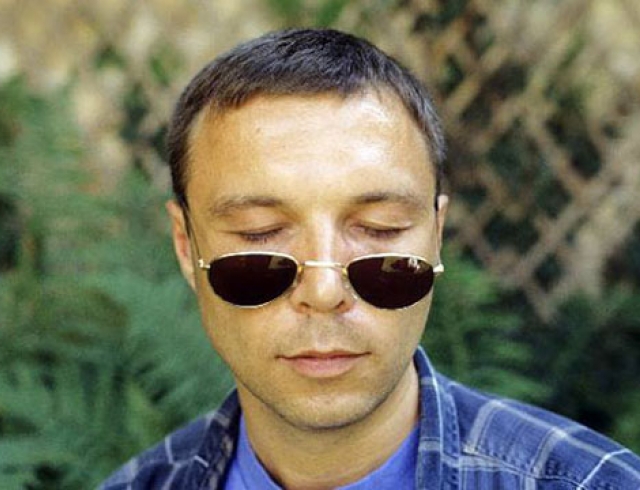 I'll be brief — this is my favorite living Russian writer! Only his impeccable non-seriousness is sufficiently non-serious to evoke my sincere and deepest respect. Pelevin is a Russian-fermented Castaneda, a carrier of stunning abstract humor, self-irony, and a master of inventing mind-bending plots. His view of things is based on a kind of mixture of "The Way of the Warrior," Hinduism, Buddhism, Taoism, alchemy, and psychedelics. His writing style is sometimes openly funny and mischievous, sometimes drearily dark and hopelessly Russian. The plots usually unfold in our big and beloved country. I don't know how the public classifies him, and I care little about that, but I confidently rank Viktor Olegovich among the enlightened people of our time.
For acquaintance, I recommend "Buddha's Little Finger" (Chapayev and Void) — from it, you'll immediately understand whether you like it or not. If it hooks you, you can continue with the short interpretation of the Minotaur myth called "The Helmet of Horror". If further interested — "Generation P", "Empire V".
Interview with "Izvestia" (2006)
People don't even vaguely understand the forces that govern their lives. They don't understand the meaning of their evolution. What is called "progress" has lowered man much below a wild animal living in freedom. The lifestyle of a beast — to eat ecologically clean food, to live in the most suitable climatic conditions for the body, to move a lot and never worry about anything — today is available only to a retired millionaire. And an ordinary person works all his life with his tongue hanging out from fatigue, and then dies from stress, having only barely managed to pay off a den in a concrete anthill. The only thing he can do is send his children into the same wheel.
Interview with "Snob" (2010)
Q: Tell me, how can we all be released?
— It's just that our ego constantly strives to squeeze one more drop of dopamine from the brain, manipulating the worn deck of habitual states of mind, and doesn't let us shift our attention to something new, although theoretically we know that it's long past time to do so. It's such a funny daily misunderstanding, from which over time a tragedy of a life miss is composed. Now about the technical aspect. Making the ass release us is impossible because it doesn't even know that we're in it. And explaining this to it is very difficult — even prayer won't help here. But it's quite realistic to gradually release it yourself. For this, if briefly, you need to lead a sober lifestyle and carefully observe what's happening in our consciousness.
Chapayev and Void (1996)
This whole world is a joke that God told to himself.
"What has always amazed me," he said, "is the starry sky beneath my feet and Immanuel Kant within us."
In reality, the words "come to oneself" mean "come to others," because it is precisely these others who from birth explain to you what efforts you must make on yourself to take the form pleasing to them.
The Helmet of Horror (2005)
[UGLI 666] ...The Lord doesn't make us pray to him. We ourselves choose our path because he created us with free will.
[Nutscracker] Don't make me laugh, Ugly. Free will. Life is like falling off a roof. Can you stop? No. Can you go back? No. Can you fly sideways? Only in an advertisement for pants for jumping off roofs. Free will consists in the fact that you can choose — to fart during the flight or hold it in until you hit the ground. That's what all the philosophers argue about.